Posts

My Lighting Qualifications

Image
LIGHTING CERTIFICATES

Basic Design Decisions-Part 1

Image
Choice of Lighting System The function of the room, the occupancy, and the visual tasks to be carried out there and the style of the decor will all influence the choice of the lighting system to be used. For the sake of convenience , the lighting systems employed in interiors can be divided into those having a mostly functional purpose- the primary systems and those that take over, as it were , where the functional lighting leaves off- the secondary systems. Primary Lighting Systems The most common primary lighting systems are those providing either: General Lighting Localised Lighting Local  lighting + general lighting General Lighting A general lighting system provides the required horizontal illuminance over the total area with a certain degree of uniformity. When used alone , the average illuminance should be equal to the required illuminance for the specific visual task. it is there fore widely employed in such places as large, open plan offices, work sho...

Factors Influencing the Lighting Design

Image
Lighting is an Art as well  as a Science. There is no ideal or optimum solution to a particular lighting problem. The design process should be seen as consisting of two quite distinct phases. Phase one begins with the client, and involves studying the various local factors that will influence the design. Phase two is the design process proper, and it is here that the first of many design decisions are made. Factors Influencing the Design It is very important that the lighting designer establishes a very good working relationship with the client and with all the others engaged in the project ( such as architects, interior designers, air conditioning engineers) at the earliest possible stage in its development. It will then often be possible to influence basic design conditions concerning the space to be lighted. Later on it might well be too late to make those changes that would have simplified or improved the final lighting design. The most important factors dictated by the...

Elements of Building Management Systems

Image
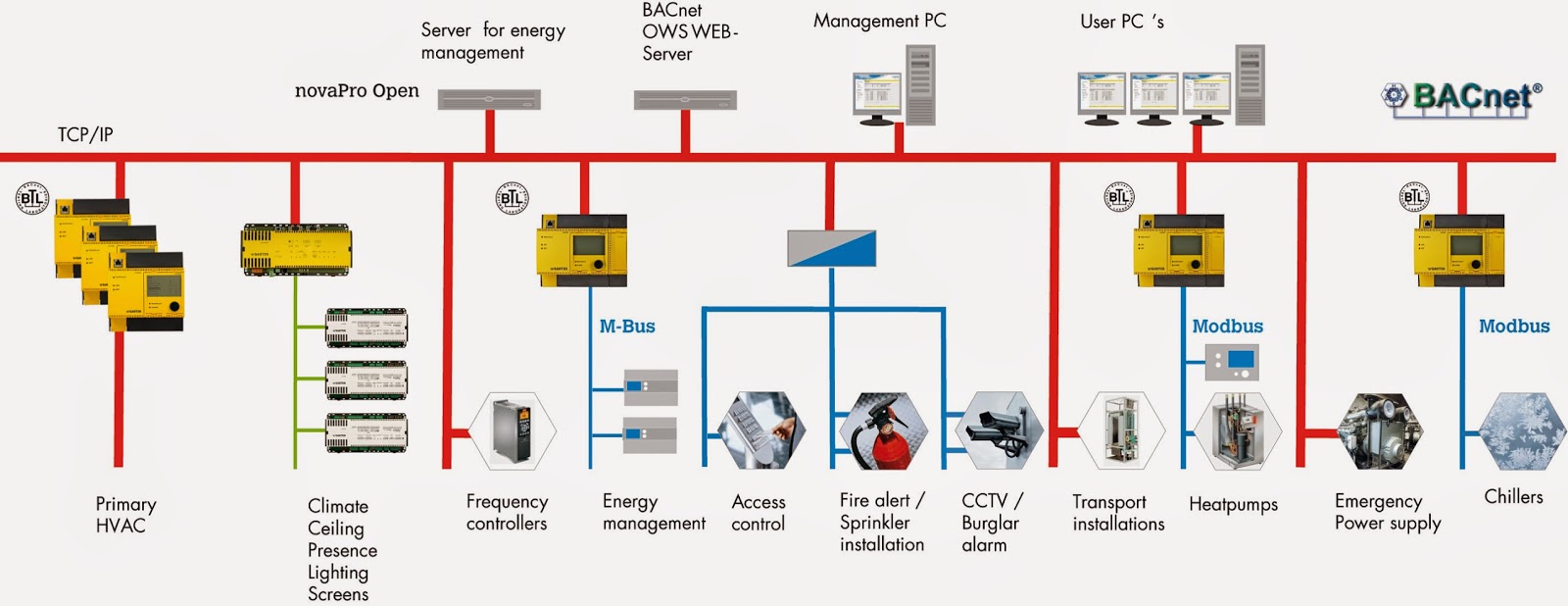
Audio Video System Integration Board Room / Meeting Rooms / Auditorium Public Announcement System Lighting Automation Energy Monitoring and Conservation Curtain Automation Fire Security Systems Surveillance Solutions Access Control Systems Power Trunking Water Management System EPABX, Video Door Phones, Intercom Elevator Control Visitor Management Advantages of Building Automation System (BAS) Centralized control Remote support Reduced complaints Staff optimization Seamless integration Energy savings Increase level of comfort Improved security BAS powers Flexibility & Convenience No location constaint Visualization Parameterization Alarm Monitoring Room Automation Data Point Lights Blinds / Curtains Temperature Sockets / Appliances Motion and Occupation Smoke Doors and Windows contacts Access Control Camera

Protocols used in Lighting Industry

Image
BACnet BACnet®, short for “Building Automation Control Network”, is a data communication protocol for building automation and control networks. BACnet is both an international (ISO) and ANSI standard for interoperability between cooperating building automation devices. Originally developed in 1987 under the auspices of the American Society of Heating Refrigerating and Airconditioning Engineers (ASHRAE), BACnet has been an ANSI standard since 1995 and an ISO standard since 2003. BACnet is a registered trademark of ASHRAE. BACnet is a standard data communication protocol that enables interoperability between different building systems and devices in building automation and control applications. BACnet offers a flexible range of networking options including the use of Ethernet or IP-centric infrastructure and a simple, low cost twisted pair communication called MS/TP that is based on EIA- 485. A sophisticated routing capability allows scaling of BACnet internetworks into larg...

Mounting Configuration of Occupancy Sensors

Image
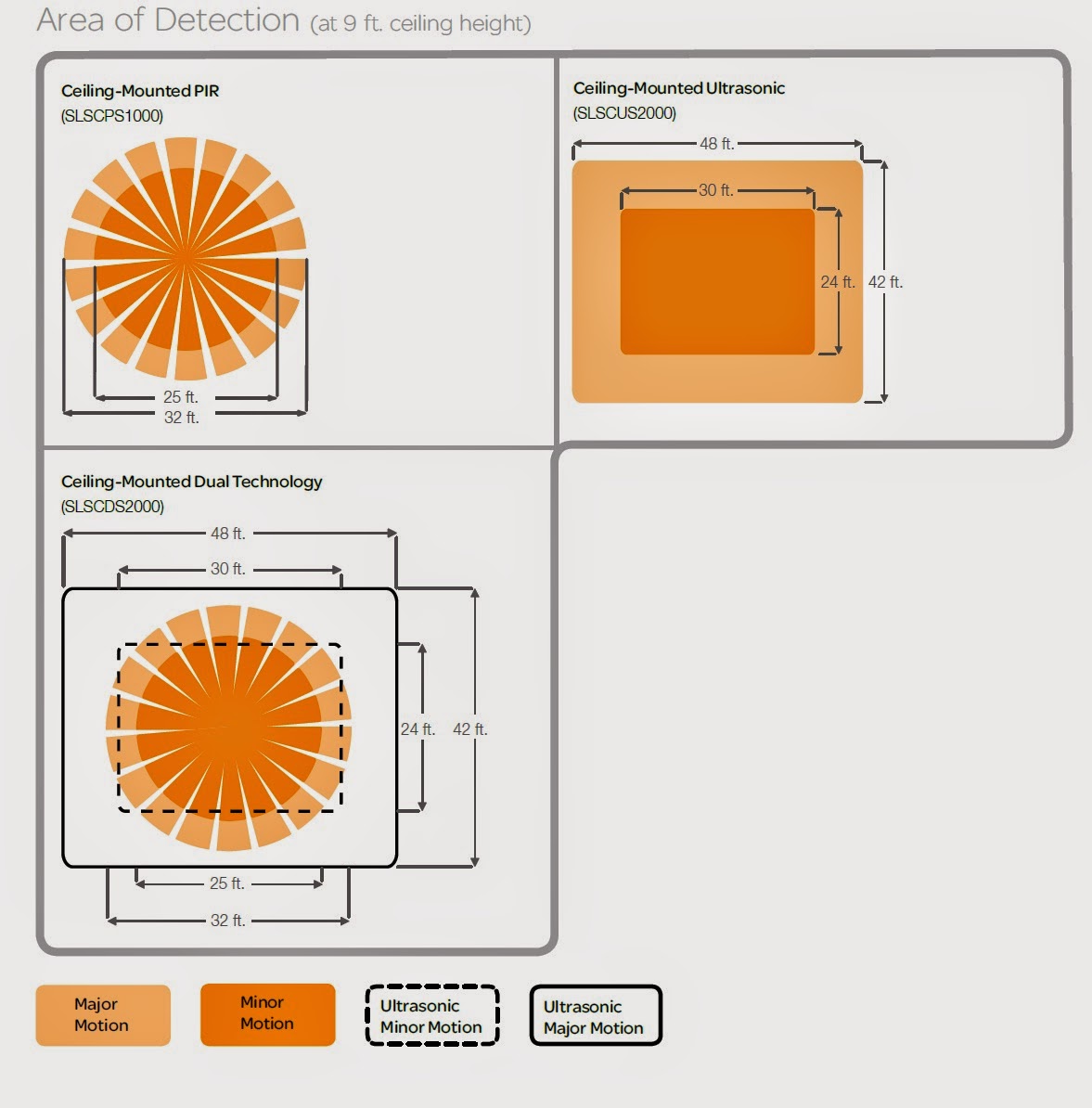
Determining the mounting configuration and location for a Occupancy Sensor is a critical design decision. The mounting configuration ,in particular ,affects the available coverage area. Improper mounting location is a leading cause of application problems with occupancy sensors. Mounting can be done at the following locations: Ceiling High Wall and corner Wall switch( Wall box) Workstation   Ceiling Appropriate for large areas that feature obstacles such as partitions,in addition to narrow spaces such as corridors and warehouse aisles. Units can be networked for control of areas that are larger than what can be controlled be a single sensor. Typically 2-2 times higher installed cost than wall switch sensors but can be economical if controlling large zones. High Wall and Corner Similarly appropriate for coverage of large areas that feature obstacles. Wall Switch (Wall Box) Appropriate for smaller enclosed spaces such as private offices with clear line of...

Light & Vision

Image
VISION A simple definition of LIGHT is visually perceived radiant energy. This visible light is a small part of the ELECTROMAGNETIC SPECTRUM and ranges in wavelengths from 380 nm to 780 nm. Light is what energizes our visual system. Light reflected from objects  into our eyes enables us to see.Lightwaves enter the human eye and send signals along the optic nerve.Light enters the eye through the pupil, is focused on the retina, and is transmitted to our brain via the optic nerve. A significant part of our brain is dedicated to the processing of visual information. Of all creatures on this earth, the human visual system is the most impressive. Birds may have sharper vision, felines may be more sensitive to motion, and horses may have almost a 360-degree field of view, but nothing can beat the combination of features humans possess. The human eye allows good depth perception, excellent color perception, reasonable motion detection, and great visual acuity. PERCEPTION...